

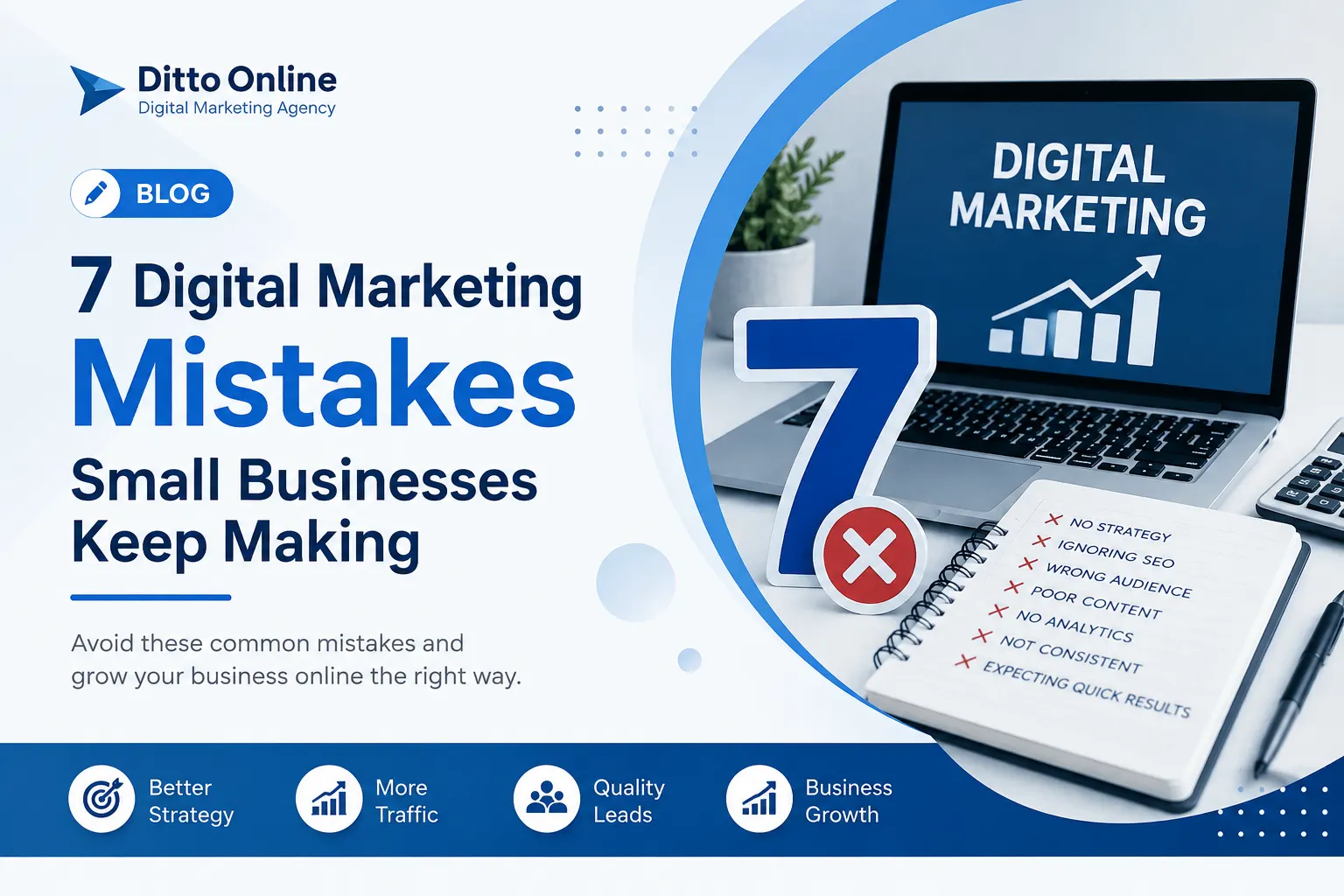

In today’s competitive online world, digital marketing is no longer optional—it’s essential. Yet many small businesses invest time and money into marketing without seeing meaningful results. The problem often isn’t the budget; it’s the strategy.
Whether you own a local business, startup, or growing company, avoiding common digital marketing mistakes can help you generate more traffic, quality leads, and long-term business growth.
In this guide, we’ll explore the 7 biggest digital marketing mistakes small businesses keep making and explain how you can avoid them to build a stronger online presence in 2026.
Table of Contents
1. Not Defining a Target Audience
Trying to market to “everyone” usually means connecting with no one. Many small businesses skip audience research and jump straight to posting content or running ads, hoping something sticks. This scattershot approach leads to generic messaging that fails to resonate with anyone in particular, driving up ad costs while lowering conversions.
Fix: Build a simple customer profile — age, location, interests, pain points, and where they spend time online. Every campaign should speak directly to that person.
2. Ignoring SEO Fundamentals
A beautiful website is useless if nobody can find it. Small businesses often treat SEO as optional or something to “do later,” missing out on free, long-term traffic. Unlike paid ads, SEO keeps working for you long after the initial effort, compounding in value the longer it’s neglected — or ignored.
Fix: Start with the basics — keyword-optimized page titles, meta descriptions, fast page load speed, mobile-friendliness, and quality content that answers real customer questions.
3. Being Inconsistent on Social Media
Posting five times in a week and then going silent for a month sends the wrong signal to both your audience and the platform algorithms. Inconsistency kills momentum and trust. Followers who don’t hear from you regularly forget you exist, and algorithms tend to deprioritize accounts with unpredictable posting patterns.
Fix: Create a realistic content calendar — even two to three well-planned posts a week beats sporadic bursts of activity.
4. Running Ads Without a Clear Goal
Boosting a post or running an ad without a defined objective — leads, sales, awareness — often leads to wasted spend. Many businesses judge success by “likes” instead of actual business outcomes. Without a clear goal, it’s nearly impossible to know whether an ad is actually helping the business or just burning through the budget.
Fix: Set one clear goal per campaign, track the right metric (conversions, not just clicks), and use that data to optimize future spend.
5. Having a Slow or Poorly Designed Website
Your website is often the first impression a potential customer has of your business, and a slow-loading or cluttered site can undo all the hard work you put into driving traffic there. Visitors expect a page to load in a few seconds — if it doesn’t, most will simply leave and land on a competitor’s site instead. A confusing layout, broken links, or a design that doesn’t work well on mobile can be just as damaging, making people question your credibility before they even read what you offer.
Fix: Regularly test your site’s loading speed using free tools like Google PageSpeed Insights, compress images, and remove unnecessary plugins or scripts. Keep the design clean and mobile-friendly, with clear navigation and an obvious path to contact you or make a purchase.
6. Not Tracking Performance
If you’re not measuring, you’re guessing. A surprising number of small businesses run campaigns for weeks or months without checking analytics to see what’s actually working. This makes it easy to keep pouring money into underperforming channels while missing the ones quietly delivering results.
Fix: Set up basic tracking (Google Analytics, Meta Pixel, or similar) from day one, and review performance monthly — not just when something feels “off.”
7. Trying to Do Everything at Once
Being on every platform, running every type of campaign, and chasing every new trend spreads resources thin and dilutes results. It’s a common trap: businesses end up doing many things poorly instead of a few things well, which shows in inconsistent branding and mediocre engagement across the board.
Fix: Focus on two or three channels where your audience actually spends time, master them, and expand only once you see consistent results.
Conclusion
Digital marketing doesn’t have to be overwhelming — it has to be intentional. Avoiding these seven mistakes can save your business time, money, and a lot of frustration, while building a foundation that actually grows with you.
Need help building a digital marketing strategy that avoids these pitfalls? Ditto Online can help you create a plan tailored to your business goals and budget.
