

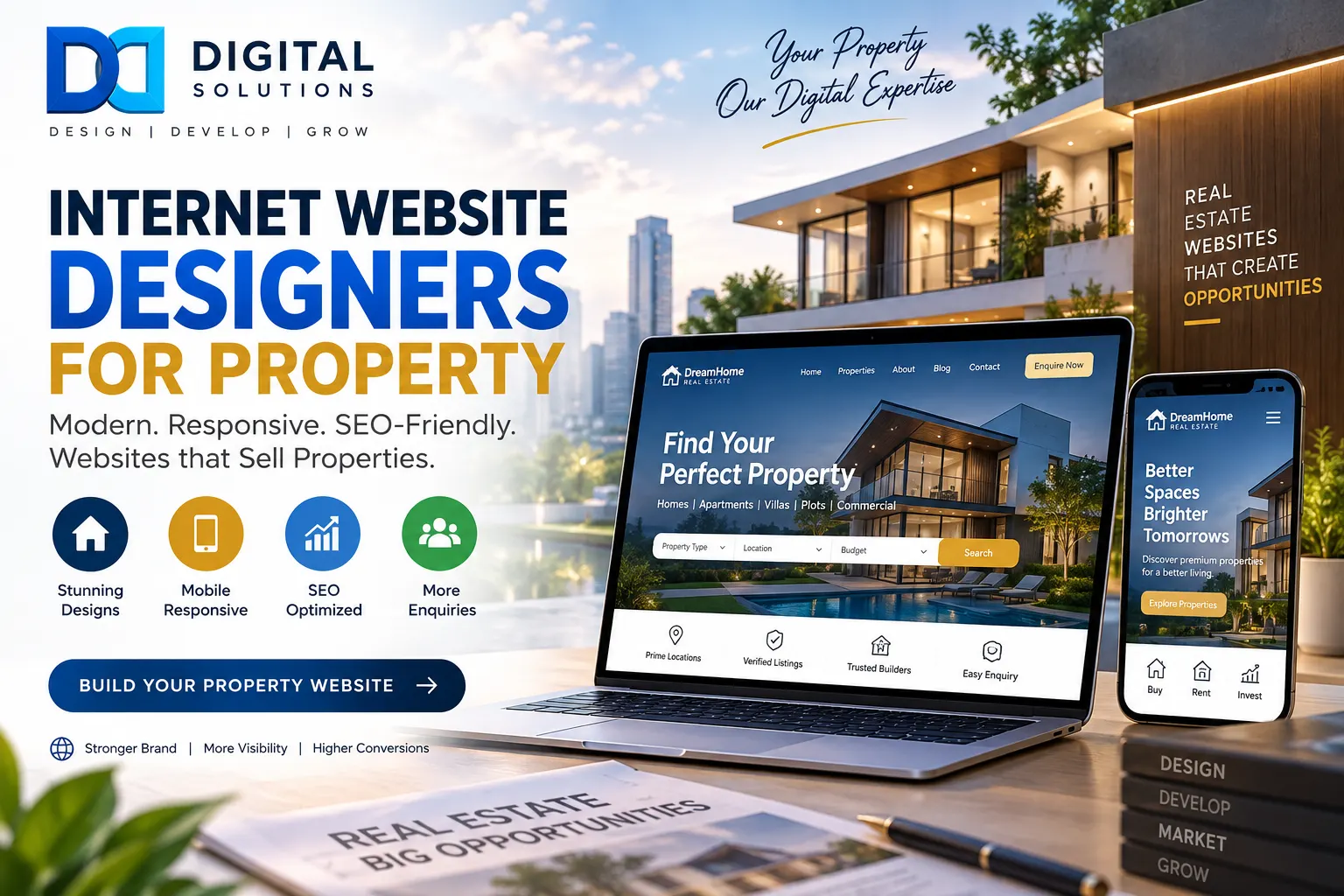

Finding the right Internet Website Designers for Property can make a major difference in how your real estate business attracts visitors, generates enquiries, and builds trust online. Property buyers and investors increasingly begin their search on the internet, comparing properties, locations, amenities, prices, builders, and real estate companies before making a decision. A professionally designed website gives your property business a strong digital presence and provides potential customers with the information they need in one convenient place.
A property website is more than an online brochure. It should showcase properties clearly, provide useful information, encourage enquiries, and work smoothly across smartphones, tablets, and desktops. Experienced website designers understand the unique requirements of property businesses and can create websites with property listings, image galleries, location information, enquiry forms, search functionality, and other useful features. A well-planned website can help turn website visitors into genuine property leads.
Table of Contents
Why Property Businesses Need a Professional Website
The property industry depends heavily on visibility, credibility, and customer enquiries. Potential buyers often search online before visiting a property or contacting an agent, builder, developer, or property consultant. A professionally designed website allows businesses to present their projects and properties in a structured and attractive manner while making important information easy to access. It also helps establish credibility when customers are comparing multiple property businesses.
A dedicated property website gives you complete control over your brand, content, property information, and customer experience. Instead of depending entirely on third-party property portals, your website can become the central destination for your digital marketing activities. You can publish new projects, update availability, add photographs, share location details, and provide enquiry options. This creates a professional online platform that supports long-term property marketing.
What Internet Website Designers for Property Do
Internet Website Designers for Property create websites specifically around the needs of real estate businesses, property consultants, builders, developers, and property marketing companies. They focus on combining attractive visual design with practical functionality so visitors can quickly understand the properties being promoted. The design should present important information without making users search through unnecessary pages or complicated menus.
Professional designers also consider website navigation, mobile responsiveness, page speed, image presentation, calls to action, enquiry forms, and search engine optimization. Property websites often contain large numbers of images, maps, floor plans, project details, and specifications, so the information must be organized carefully. A good designer creates a website structure that makes browsing properties simple while supporting business objectives such as enquiries, calls, site visits, and lead generation.
Essential Features of a Property Website
A successful property website should provide visitors with everything they need to understand a property before making an enquiry. Property listings can include photographs, property descriptions, configurations, amenities, pricing information, location details, floor plans, and project specifications. Search and filtering features can also help visitors quickly find properties according to their preferred requirements.
Other useful features include enquiry forms, click-to-call buttons, map integration, project galleries, testimonials, FAQs, downloadable brochures, and social media integration. For larger property businesses, advanced features such as property search, lead management integrations, CRM connections, and project comparison tools can improve the overall user experience. The exact features should depend on the business model, property portfolio, target audience, and marketing strategy.
Mobile-Friendly Property Website Design
A large number of property searches take place on smartphones, making mobile-friendly website design essential. Visitors should be able to browse property photographs, read descriptions, check amenities, view locations, and submit enquiries comfortably from smaller screens. A website that requires excessive zooming, has difficult navigation, or loads slowly on mobile devices can cause potential customers to leave before contacting the business.
Responsive web design allows a property website to automatically adapt its layout to different screen sizes. Images, buttons, menus, forms, and content should remain easy to use regardless of the device. Professional Internet Website Designers for Property test websites across different screen sizes and browsers to ensure visitors receive a consistent experience. Mobile optimization also supports better usability and can contribute to stronger search visibility.
Property Listings That Attract More Enquiries
Property listings are one of the most important sections of a real estate website. Each listing should provide clear, useful, and accurate information instead of relying only on attractive photographs. A well-structured property page can include the property name, location, configuration, size, amenities, specifications, nearby landmarks, available facilities, and enquiry options.
High-quality images are particularly important because property buyers want to understand the appearance and surroundings of a property before making contact. Galleries should load efficiently while maintaining good visual quality. Floor plans, virtual tours, videos, and location maps can provide additional information. Clear calls to action such as “Request Details,” “Schedule a Visit,” or “Enquire Now” can encourage interested visitors to take the next step.
SEO-Friendly Website Design for Property Businesses
Search engine optimization should be considered from the beginning of the website design process. A visually attractive property website will not generate enough organic traffic if search engines cannot properly understand and index its content. SEO-friendly design includes logical site architecture, descriptive URLs, optimized headings, useful page content, image optimization, internal linking, and mobile responsiveness.
Property businesses can target relevant searches around their services, locations, property types, and projects. However, each important page should have a distinct search intent to avoid keyword cannibalization. For example, a general property website design page should not compete directly with a location-specific property design page or an individual project page. A carefully planned SEO structure allows every page to serve a specific purpose.
Importance of Location-Based Property SEO
Real estate searches are strongly connected to location. Customers may search for apartments, commercial properties, plots, villas, builders, or property consultants within a particular city, neighbourhood, or locality. A property website can therefore benefit from properly optimized location-based pages that provide genuine and useful information about the properties and areas being served.
Location pages should offer more than simply adding a city name to existing content. They should provide meaningful information about the area, property opportunities, nearby landmarks, connectivity, amenities, and relevant services. Designers and SEO professionals can structure these pages so that they are useful to visitors as well as search engines. This approach can help property businesses attract users who are actively searching for real estate opportunities in specific locations.
Fast Loading and Performance Optimization
Website speed plays an important role in user experience, particularly for property websites containing many high-resolution photographs. If pages take too long to load, visitors may leave before viewing the available properties or submitting an enquiry. Performance optimization can include image compression, appropriate image formats, browser caching, efficient code, optimized plugins, and reliable hosting.
Professional website designers should balance visual quality with performance. Property photographs need to look professional, but they should also be delivered efficiently. Lazy loading can help by loading images when users need them rather than loading every image immediately. A faster website provides a smoother browsing experience and creates a stronger foundation for SEO and lead generation.
Property Website Design and Lead Generation
The primary goal of many property websites is not simply to receive visitors but to generate qualified enquiries. Website design should therefore guide visitors toward useful actions without making the experience feel aggressive or complicated. Strategically placed enquiry forms, contact buttons, property-specific calls to action, and appointment options can make it easier for interested customers to get in touch.
Lead generation can also be improved by providing valuable information. Downloadable brochures, floor plans, project details, price enquiries, location guides, and property updates can encourage visitors to submit their contact information. Forms should remain simple and request only information that is genuinely necessary. A smooth enquiry process reduces friction and increases the possibility of converting website visitors into potential property customers.
Building Trust Through Property Website Design
Buying or investing in property is a major decision, so trust is extremely important. A professional website can communicate reliability through transparent information, high-quality project photographs, clear contact details, company information, customer testimonials, project documentation, and useful FAQs. Consistent branding across the website can also make the business appear more established and professional.
Trust should be supported by accurate information rather than exaggerated claims. Property websites should clearly present relevant project details and avoid misleading information. Including an easy-to-find contact page, business information, location details, and genuine customer experiences can give visitors greater confidence. Good website design combines professional presentation with transparency and usability.
How Website Designers Improve Property User Experience
User experience determines how easily visitors can find and understand information on a website. Property websites can contain large amounts of information, so poor organization can quickly become confusing. Professional designers create intuitive menus, clear page structures, readable typography, useful filters, and logical navigation paths to make property discovery easier.
A strong user experience also considers what visitors are likely to do next. Someone viewing a property may want to see photographs, check the location, review amenities, download a brochure, or submit an enquiry. These actions should be easy to find. By understanding the customer journey, Internet Website Designers for Property can build websites that guide visitors naturally from property discovery to enquiry.
Choosing the Right Internet Website Designers for Property
When selecting website designers for a property business, look beyond the visual appearance of their previous websites. Review whether their projects demonstrate strong navigation, mobile responsiveness, performance, SEO structure, lead-generation features, and easy content management. A website should support your business goals rather than simply look attractive.
It is also useful to understand the development process before starting the project. Ask about website planning, design, development, SEO implementation, content integration, testing, security, hosting, maintenance, and future updates. Experienced designers should be able to explain how they will structure the website according to your property portfolio and target audience. Choosing a team with relevant property website experience can reduce development challenges and create a more effective final website.
Benefits of Professional Property Website Design
Investing in professional property website design can provide several long-term advantages. It can create a stronger brand presence, improve the presentation of properties, simplify customer enquiries, support digital marketing campaigns, and provide a central platform for publishing property information. It can also help businesses reduce their dependence on external listing platforms.
A well-designed website can continue supporting your marketing activities after the initial development is complete. New properties, blogs, location pages, customer testimonials, videos, and project updates can be added over time. When combined with SEO, paid advertising, social media marketing, and content marketing, the website can become an important part of a broader property lead-generation strategy.
Conclusion
Choosing professional Internet Website Designers for Property is an important step for businesses that want to build a strong and credible online presence. A successful property website should combine attractive design, useful property information, mobile responsiveness, fast performance, SEO-friendly architecture, and effective lead-generation features. The objective is to make it easy for potential buyers, investors, tenants, and property seekers to discover properties and take the next step.
From property listings and image galleries to location pages, enquiry forms, and SEO optimization, every element should support the customer journey. Instead of treating a website as a simple digital brochure, property businesses should use it as a long-term marketing and lead-generation platform. With the right website design strategy, a property business can improve its online visibility, present its properties professionally, build customer trust, and create more opportunities for genuine enquiries.
