

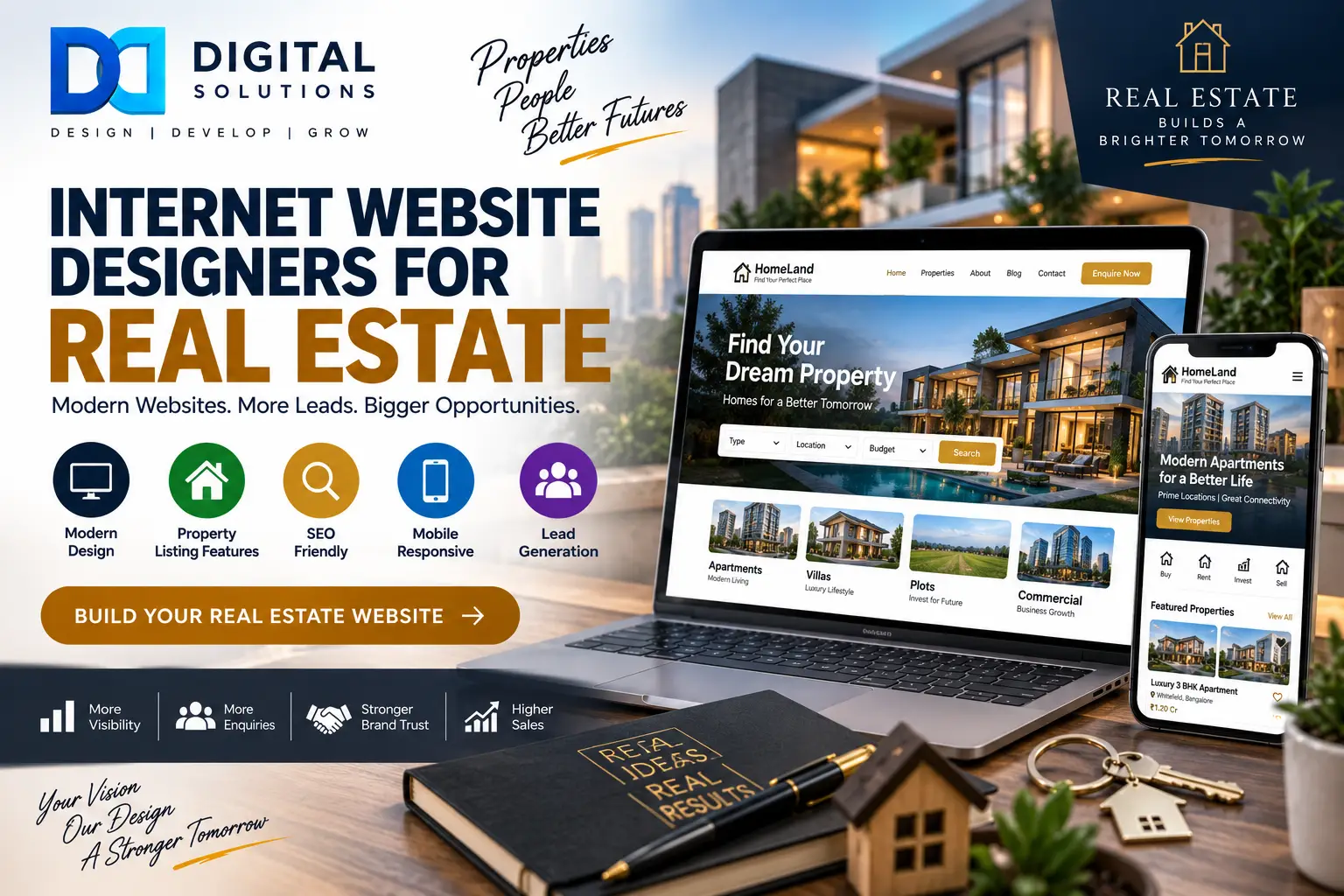

The real estate industry has become increasingly dependent on digital platforms, and a professional website is now one of the most important assets for property businesses. Buyers, sellers, investors, builders, developers, and tenants often search online before contacting a real estate company. A well-designed website can showcase properties, generate enquiries, build trust, and provide potential customers with the information they need to make confident decisions.
Professional Internet Website Designers for Real Estate understand that a property website needs more than an attractive layout. It should provide an excellent user experience, display property listings clearly, work smoothly on mobile devices, support search engine optimization, and make it easy for visitors to enquire about properties. The right website can become a powerful lead-generation platform for real estate businesses.
Table of Contents
Why Real Estate Businesses Need a Professional Website
A professional website gives a real estate company a central online presence where customers can explore properties and understand the services offered. Unlike social media profiles, a dedicated website allows businesses to organize property information, create service pages, publish market-related content, and provide detailed information about their projects. This creates a more structured experience for potential buyers and investors.
A website also helps establish credibility when customers are researching a real estate brand. Professional photographs, detailed property descriptions, project information, location details, testimonials, company information, and enquiry options can create a stronger impression. When the website is fast, mobile-friendly, secure, and easy to navigate, visitors are more likely to spend time exploring available properties and contacting the business.
Real Estate Website Design Focused on Property Buyers
A successful real estate website should be designed around the needs of property buyers and sellers. Visitors should be able to quickly understand what properties are available, where they are located, what features they offer, and how they can arrange a site visit or request additional information. Complicated navigation can cause potential customers to leave before they discover relevant properties.
Real estate website designers should organize information into clear categories such as residential properties, commercial properties, apartments, villas, plots, rental properties, and new projects. Property pages can include photographs, specifications, amenities, location information, floor plans, pricing details where appropriate, and enquiry forms. A clear structure makes it easier for visitors to compare options and take the next step.
Property Listing Features for a Real Estate Website
Property listings are one of the most important components of a real estate website. Customers should be able to browse available properties without unnecessary difficulty. A well-designed listing system can display property images, titles, locations, property types, sizes, prices, and important features in an organized format that makes comparison easier.
Advanced search and filtering can further improve the user experience. Visitors may want to filter properties based on location, budget, property type, number of bedrooms, size, amenities, or availability. Providing these options allows users to narrow down their choices quickly. Each individual property should then have a dedicated page containing comprehensive information and a clear call to action.
Mobile-Friendly Website Design for Real Estate
Many property searches happen on smartphones, making responsive website design essential for real estate companies. Potential buyers may browse property listings while travelling, during work breaks, or while visiting a particular neighborhood. If a website is difficult to use on a mobile device, visitors may leave and search for another real estate company.
A mobile-friendly real estate website should have readable text, properly sized images, simple menus, easy-to-use filters, and clearly visible enquiry buttons. Property galleries should work smoothly on smaller screens, while contact options should remain accessible without requiring users to search through multiple pages. Mobile optimization also contributes to a better overall user experience and supports search visibility.
SEO-Friendly Website Design for Real Estate Companies
Search engine optimization should be considered during website development rather than added as an afterthought. A real estate website can target searches related to properties, locations, property types, projects, and real estate services. Proper page structures, headings, titles, descriptions, URLs, internal links, image optimization, and useful content can help search engines understand the website.
Each important page should have a clearly defined search intent. For example, a page targeting apartments in a particular location should not compete directly with a separate page targeting villas in the same location. Creating unique and useful pages for different search requirements can help reduce keyword cannibalization and create a more organized SEO structure.
Location-Based Real Estate Website Pages
Location is one of the most important factors in property searches. Potential customers commonly search for properties based on neighborhoods, cities, business districts, transport connections, schools, and other local areas. Real estate websites can create useful location pages that provide genuine information about available properties and the areas they serve.
A strong location page should contain more than a repeated location keyword. It can explain the types of properties available, nearby facilities, connectivity, lifestyle benefits, investment considerations, and relevant listings. Unique content for each location helps provide value to users while giving search engines a clearer understanding of the geographical areas covered by the real estate business.
High-Quality Property Images and Virtual Experiences
Property images play a major role in real estate website performance because customers want to understand what a property looks like before arranging a visit. High-quality photographs of rooms, exteriors, amenities, common areas, views, and surroundings can make listings more attractive and informative. Images should be optimized properly so that they do not unnecessarily slow down the website.
Depending on the property and business model, websites can also include virtual tours, videos, floor plans, interactive maps, and other visual experiences. These features can help remote buyers understand a property more effectively. However, visual elements should be implemented carefully so that they enhance the user experience without making pages difficult to load or navigate.
Real Estate Website Lead Generation and Enquiry Forms
The primary objective of many real estate websites is to generate qualified enquiries. A visitor may be interested in a property but still need additional information before making a decision. Simple enquiry forms can allow users to request a brochure, schedule a site visit, ask about pricing, or speak with a property consultant.
Forms should request only the information that is genuinely necessary at the initial stage. Clear calls to action such as “Enquire Now,” “Schedule a Site Visit,” “Request Property Details,” or “Talk to a Property Expert” can guide visitors toward the next step. Contact numbers and messaging options can also be placed prominently for users who prefer immediate communication.
WhatsApp Integration for Real Estate Websites
WhatsApp integration can make communication more convenient for real estate customers. A visitor exploring a property can click a WhatsApp button and immediately ask about availability, pricing, amenities, location, or site visits. This reduces the number of steps required to contact the real estate company and can improve the enquiry experience.
The WhatsApp option can be placed on individual property pages, project pages, and contact sections. Pre-filled messages can also be used to provide context, such as the name of the property a visitor is enquiring about. Fast and professional responses are important because property enquiries can be time-sensitive, particularly when customers are comparing multiple options.
Website Speed and Performance for Real Estate
Real estate websites often contain large numbers of photographs, videos, maps, property listings, and interactive features. Without proper optimization, these elements can make pages slow. Slow websites can create a poor user experience and may cause visitors to abandon property searches before contacting the business.
Website designers should optimize image sizes, use efficient formats, implement caching where appropriate, minimize unnecessary scripts, and ensure that important content loads efficiently. Performance should be considered across desktop and mobile devices. A fast website allows users to browse more listings comfortably and creates a smoother journey from property discovery to enquiry.
Trust-Building Features for Real Estate Websites
Buying or investing in property is a major decision, so trust is extremely important. A real estate website should provide visitors with enough information to understand who they are dealing with. An informative About Us page, company history, project information, contact details, testimonials, certifications where applicable, and transparent business information can help establish credibility.
Trust can also be strengthened through professional property photography, accurate descriptions, clear communication, and genuine customer experiences. Websites should avoid misleading claims or incomplete property information. Providing accurate and useful information helps create a more professional relationship between the real estate business and potential customers.
Real Estate Website Design for Builders and Developers
Builders and property developers have different requirements from traditional property agencies. Their websites may need dedicated project pages, construction updates, floor plans, amenities, specifications, master plans, location information, brochures, and enquiry systems. A well-organized project structure allows potential buyers to explore each development in detail.
Each project should ideally have a dedicated landing page containing relevant information rather than placing all projects on a single crowded page. Developers can also publish information about upcoming projects, completed developments, construction progress, and company achievements. This creates a stronger digital portfolio and provides visitors with more reasons to trust the developer.
Real Estate Blog and Content Marketing Strategy
A real estate blog can support both SEO and customer education. Property businesses can publish articles about buying homes, selecting investment properties, understanding local markets, comparing property types, preparing for a home purchase, and evaluating neighborhoods. Useful content can attract people who are researching property options before they are ready to make an enquiry.
Blog content should be organized around specific search intent and should provide genuinely useful information. Articles can internally link to relevant property listings, location pages, project pages, and service pages. This creates a connection between informational content and commercial pages while helping visitors move naturally from research to property discovery.
Website Security and Maintenance for Real Estate
Real estate websites collect valuable business information and may include enquiry forms, customer contact details, property databases, and administrative systems. Security and regular maintenance are therefore important aspects of website management. Websites should use secure connections, updated software, strong administrative controls, reliable backups, and appropriate security measures.
Regular maintenance also helps ensure that property listings remain accurate and functional. Broken links, outdated project information, missing images, expired listings, or incorrect contact details can reduce customer trust. Ongoing website maintenance allows real estate companies to keep their digital presence accurate as properties, projects, and business information change.
Integration With Digital Marketing Campaigns
A real estate website should work together with the company’s broader digital marketing strategy. Search engine optimization can bring organic visitors, while Google Ads and social media advertising can generate targeted traffic. The website then needs to provide relevant landing pages that encourage visitors to enquire about the advertised property or project.
Campaign-specific landing pages can be especially effective for new property launches, investment projects, luxury developments, rental properties, and limited-period offers. Instead of sending every advertising visitor to the homepage, businesses can direct users to a page specifically related to the campaign. This creates a more relevant experience and can improve the chances of generating qualified leads.
Choosing Professional Internet Website Designers for Real Estate
Choosing the right Internet Website Designers for Real Estate is important because property websites have specific technical, visual, and marketing requirements. A general website may look attractive but still fail to provide the property search, listing management, enquiry, SEO, and performance features required by a real estate business.
A professional real estate website design team should understand property listing structures, responsive design, SEO-friendly development, lead-generation systems, website speed, content organization, and integration requirements. The goal should be to create a website that is not only visually appealing but also easy for customers to use and practical for the business to manage.
Benefits of a Professional Real Estate Website
A professionally designed real estate website can provide several advantages, including stronger online credibility, improved property presentation, better user experience, increased search visibility, easier lead generation, and stronger integration with digital marketing campaigns. It can give property businesses a platform where customers can discover and evaluate properties at any time.
A well-built website can also support long-term business growth. New property listings, locations, projects, blogs, testimonials, and marketing campaigns can be added as the company grows. Instead of treating the website as a simple online brochure, real estate companies can develop it into a complete digital property platform that supports marketing and sales activities.
How Real Estate Website Design Supports Business Growth
The best real estate websites connect design, technology, content, SEO, and lead generation into one system. A visitor may discover the business through a Google search, arrive on a location page, explore property listings, view photographs, read project information, and then submit an enquiry or request a site visit. Every stage should be designed to make the customer’s journey as simple as possible.
Professional website design also gives real estate businesses greater control over their online presence. Instead of relying entirely on third-party property portals or social media platforms, companies can build their own digital asset and direct customers toward their website. Over time, a strong website can support brand visibility, property discovery, customer trust, and lead generation.
Conclusion
Internet Website Designers for Real Estate play an important role in creating websites that are designed specifically around property businesses and their customers. A successful real estate website should combine attractive design with property listings, advanced search features, responsive layouts, SEO-friendly structures, high-quality visuals, enquiry systems, fast performance, and strong trust signals.
Whether the business is a real estate agency, builder, property developer, broker, or investment company, a professional website can become the foundation of its digital marketing strategy. By creating useful location pages, optimized property listings, informative content, dedicated project pages, and clear conversion paths, real estate businesses can provide a better online experience and create more opportunities for qualified property enquiries.
