

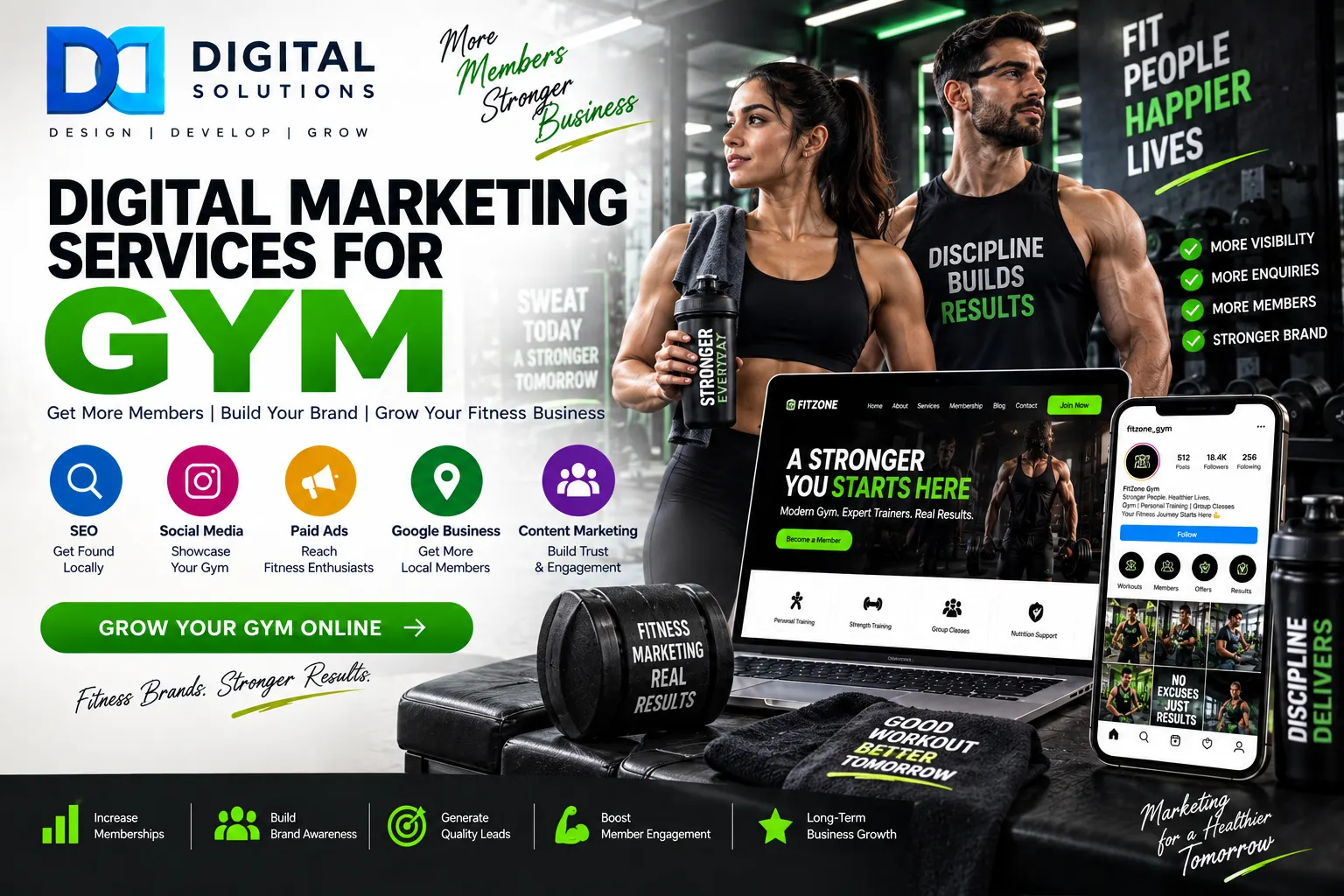

The fitness industry has become highly competitive, with gyms, fitness studios, personal trainers, yoga centers, CrossFit facilities, and wellness brands competing for the attention of local customers. People no longer choose a gym only because it is close to their home or workplace. They search online, compare facilities, check reviews, explore social media profiles, watch workout videos, and look at membership offers before making a decision. This makes a strong digital presence essential for modern fitness businesses.
Digital Marketing Services for Gym help fitness businesses attract the right audience, increase local visibility, generate membership enquiries, promote offers, and build a recognizable brand. A complete strategy can combine search engine optimization, Google Business Profile optimization, social media marketing, paid advertising, content creation, website optimization, reputation management, and lead generation. When these channels work together, gyms can create a consistent customer journey from online discovery to membership registration.
Table of Contents
Why Digital Marketing Is Important for Gyms
Digital marketing allows gyms to reach potential members when they are actively looking for fitness solutions. Searches such as “gym near me,” “best gym in [location],” “fitness center near me,” and “personal trainer near me” can indicate strong interest from people who are ready to compare options. If your gym does not appear prominently in these searches, competitors may capture those potential customers.
A professional digital marketing strategy helps gyms reach different customer groups based on their goals and interests. Some people may want weight-loss programs, while others may be interested in strength training, bodybuilding, group workouts, personal training, or general fitness. Creating targeted campaigns and content for these audiences can make marketing more relevant and improve the quality of enquiries.
Local SEO for Gyms to Attract Nearby Customers
Local SEO is one of the most valuable strategies for gyms because most members prefer a fitness center that is conveniently located. Optimizing your website and local online presence can help your business become more visible for searches involving your city, neighborhood, landmark, or nearby area. Local search visibility can put your gym in front of people who are actively looking for fitness facilities.
A strong local SEO strategy should include location-specific website content, optimized page titles, descriptions, headings, internal links, location information, and relevant business details. The gym should also maintain accurate information across important online platforms. Creating genuinely useful location pages can help attract customers from different areas without simply repeating the same content and keywords across multiple pages.
Google Business Profile Marketing for Gyms
A well-maintained Google Business Profile can help potential members discover a gym while searching for nearby fitness options. Customers can often see important business information such as the gym’s location, operating hours, photographs, reviews, contact details, and other relevant information. This information can influence whether someone decides to visit or enquire.
Gyms should regularly review their business information and keep photographs updated to accurately represent their facilities. Genuine reviews from members can also strengthen online credibility. Responding professionally to customer feedback demonstrates that the business values its members. A consistent local presence can make it easier for potential customers to find and evaluate the gym.
Social Media Marketing for Gym Businesses
Social media is particularly effective for gyms because fitness is highly visual and works well with photographs and short-form videos. Workout demonstrations, transformation stories, trainer introductions, exercise tips, facility tours, member experiences, and motivational content can help create an active online community. Platforms such as Instagram, Facebook, and YouTube can help gyms stay connected with potential and existing members.
A successful social media strategy should not focus entirely on membership promotions. Educational and entertaining content can build trust and demonstrate expertise. Trainers can explain exercises, discuss common workout mistakes, share fitness routines, and provide useful lifestyle tips. Promotional posts can then be combined with this content to create a balanced and engaging social media presence.
Instagram Marketing Strategies for Gyms
Instagram provides gyms with an opportunity to showcase their facilities, trainers, members, workouts, and fitness programs through highly visual content. Reels can demonstrate exercises, training sessions, gym equipment, workout challenges, and motivational moments. Stories can be used for daily updates, class schedules, limited-time offers, polls, questions, and behind-the-scenes content.
Consistency is important when building a fitness brand on Instagram. Content should follow a recognizable visual and communication style so that users can easily identify the gym. Location tags, relevant hashtags, strong captions, and clear calls to action can also support discovery. Most importantly, content should provide value instead of relying on repetitive promotional messages.
Google Ads for Gym Membership Leads
Google Ads can help gyms reach people who are already searching for fitness services. A person searching for “gym near me” or “personal training near me” may be closer to making a membership decision than someone simply viewing a general fitness post. Paid search campaigns can therefore complement organic SEO and provide additional visibility.
Campaigns can be separated according to different services and customer needs. For example, a gym can create campaigns for general memberships, personal training, women-only fitness programs, weight-loss programs, bodybuilding, or group classes. Sending each advertisement to a relevant landing page instead of a generic homepage can make the experience more focused and encourage visitors to submit an enquiry.
Social Media Advertising for Gym Memberships
Social media advertising can help gyms reach potential members based on location, interests, demographics, and other available targeting options. Fitness businesses can use paid campaigns to promote introductory memberships, free trials, seasonal offers, personal training programs, group classes, or new facility launches.
The advertisement should have a clear objective and a strong reason for the user to respond. High-quality fitness visuals, Direct messaging, clear benefits, and an easy enquiry process can improve campaign performance. Gyms should track leads, calls, form submissions, and membership conversions rather than judging campaigns only by likes or impressions.
Gym Website Design and Lead Generation
A professional gym website acts as the central destination for customers who want more information about the business. It should clearly explain membership options, facilities, classes, trainers, timings, location, contact details, and available programs. High-quality photographs can give potential members a better understanding of the gym environment before they visit.
The website should also be designed to generate enquiries. Clear calls to action such as “Join Now,” “Book a Free Trial,” “Get Membership Details,” or “Talk to a Trainer” can guide visitors toward conversion. Enquiry forms should be simple, while phone and WhatsApp contact options should be easy to find, particularly for mobile users.
SEO Content Marketing for Gyms
Content marketing can help gyms attract people who are researching fitness topics before choosing a membership. Blog articles can cover workout routines, beginner fitness tips, strength training, cardio, gym equipment, recovery, nutrition basics, exercise techniques, and other relevant subjects. Useful content can introduce the brand to potential members earlier in their decision-making process.
A strong content strategy should also connect informational articles with commercial pages. For example, an article about beginner workouts can link naturally to the gym’s beginner fitness program. Content should have a specific search intent and target relevant keywords without forcing them into every paragraph. This structured approach can support SEO while avoiding unnecessary keyword overlap between pages.
Video Marketing for Fitness Businesses
Video is one of the strongest content formats for fitness businesses because movement and exercise are easier to demonstrate visually. Gyms can create short videos showing exercises, equipment demonstrations, trainer tips, workout routines, facility tours, class previews, and member experiences. These videos can be distributed across Instagram, YouTube, Facebook, and the gym’s website.
Video content can also help potential customers understand the gym’s atmosphere before visiting. Showing real trainers, actual facilities, and genuine workout sessions can create familiarity and trust. A consistent video strategy can strengthen brand awareness and give the gym a library of reusable content for different digital marketing campaigns.
Online Reputation Management for Gyms
Online reputation can strongly influence a potential member’s decision. Customers often check ratings and reviews before visiting a gym, especially when several fitness centers are available nearby. Positive experiences shared by genuine members can provide social proof and make a gym appear more trustworthy.
Gyms should encourage satisfied members to leave honest reviews without manipulating or fabricating feedback. Negative reviews should be handled professionally and respectfully. Responding to concerns demonstrates that the business takes customer experience seriously. Consistent service quality combined with responsible reputation management can help build a stronger online brand over time.
WhatsApp Marketing for Gyms
WhatsApp can provide a convenient communication channel between gyms and potential members. People can use WhatsApp to ask about membership prices, trial sessions, class schedules, personal training, facilities, or available offers. A direct messaging option can reduce the effort required to make an enquiry.
Gyms can also use WhatsApp for appropriate customer communication such as trial confirmations, class information, membership updates, event announcements, and relevant promotional messages. Communication should remain useful and respectful rather than becoming excessive. Fast responses are particularly valuable because potential members may be comparing multiple gyms at the same time.
Digital Marketing for Gym Offers and Free Trials
Special offers can be an effective way to generate new membership enquiries. Gyms may promote introductory memberships, free trial sessions, joining discounts, annual plans, group packages, personal training offers, or seasonal fitness programs. Digital marketing makes it possible to promote these offers across search engines, social media, websites, and messaging channels.
Every offer should communicate the essential information clearly, including the benefit, eligibility, duration, and action required. Dedicated landing pages can be created for major campaigns so visitors immediately see the relevant offer. Tracking enquiries and conversions allows the gym to identify which promotions generate valuable customers rather than simply attracting clicks.
Mobile-Friendly Digital Marketing for Gyms
Many customers search for gyms on their smartphones, particularly when they are looking for a fitness center near their home, workplace, or current location. A gym website therefore needs to provide an excellent mobile experience. Visitors should be able to quickly find the address, phone number, membership information, timings, and enquiry options.
Mobile optimization should include fast-loading pages, readable content, properly sized images, simple navigation, and clearly visible buttons. A potential customer should not have to search through multiple pages to find out how to contact the gym. Making the mobile experience simple can reduce friction and improve the chances of turning website visitors into enquiries.
Targeting Different Gym Customer Segments
Not every potential gym member has the same goals. Students may be interested in affordable memberships, professionals may prefer gyms near their workplace, beginners may want guidance, and experienced fitness enthusiasts may look for specialized equipment or personal training. Digital marketing allows gyms to create campaigns around these different customer needs.
Dedicated content and landing pages can target specific services without forcing one page to rank for every fitness-related keyword. For example, personal training, women’s fitness programs, weight-loss programs, and strength training can each have distinct pages if the gym genuinely provides those services. This improves relevance for users and creates a cleaner SEO structure.
Choosing the Right Digital Marketing Services for Gym
Every gym has different goals depending on its location, membership model, services, competition, pricing, and target audience. A new gym may need website development, local SEO, social media setup, Google Ads, and launch campaigns. An established gym may require ongoing SEO, content marketing, reputation management, social media advertising, and lead-generation optimization.
When selecting Digital Marketing Services for Gym, businesses should look for an integrated strategy rather than disconnected marketing activities. SEO can generate long-term organic visibility, social media can build the brand, paid advertising can produce targeted leads, and the website can convert those visitors into enquiries. Combining these channels creates a stronger and more consistent customer journey.
Benefits of Professional Digital Marketing for Gyms
Professional digital marketing can help gyms improve online visibility, attract local customers, generate membership enquiries, promote fitness programs, build trust, and strengthen their brand. A well-planned strategy allows fitness businesses to communicate with potential members at different stages of the buying journey.
Digital marketing also creates long-term assets for the business. A properly optimized website, useful blog content, strong local presence, genuine reviews, active social media profiles, and well-structured campaigns can continue supporting the gym as it grows. Consistent optimization and measurement can make digital marketing an important part of a gym’s long-term customer acquisition strategy.
How Digital Marketing Helps Gyms Grow Memberships
The most effective fitness marketing strategies connect visibility, content, advertising, website experience, and sales follow-up. A potential member might discover a gym through a Google search, visit its website, watch a workout video, check reviews, view an offer, and finally contact the gym through WhatsApp or a phone call. Every step should make the decision easier.
A strong digital presence also helps gyms compete beyond traditional word-of-mouth marketing. Instead of waiting for referrals, businesses can actively reach people who are searching for fitness services in their area. By combining local SEO, content, social media, paid advertising, reputation management, and conversion-focused website design, gyms can create a sustainable system for generating new membership opportunities.
Conclusion
Digital Marketing Services for Gym can help fitness businesses build stronger online visibility and attract more potential members in an increasingly competitive market. From local SEO and Google Business Profile optimization to social media marketing, Google Ads, content creation, website development, video marketing, and reputation management, every channel can contribute to a stronger digital presence.
The key is to create a strategy that focuses on the right audience and connects every marketing activity to a clear business objective. A gym that provides valuable content, maintains a professional online presence, showcases its facilities effectively, responds quickly to enquiries, and consistently measures results can create more opportunities for memberships and long-term customer relationships.
