

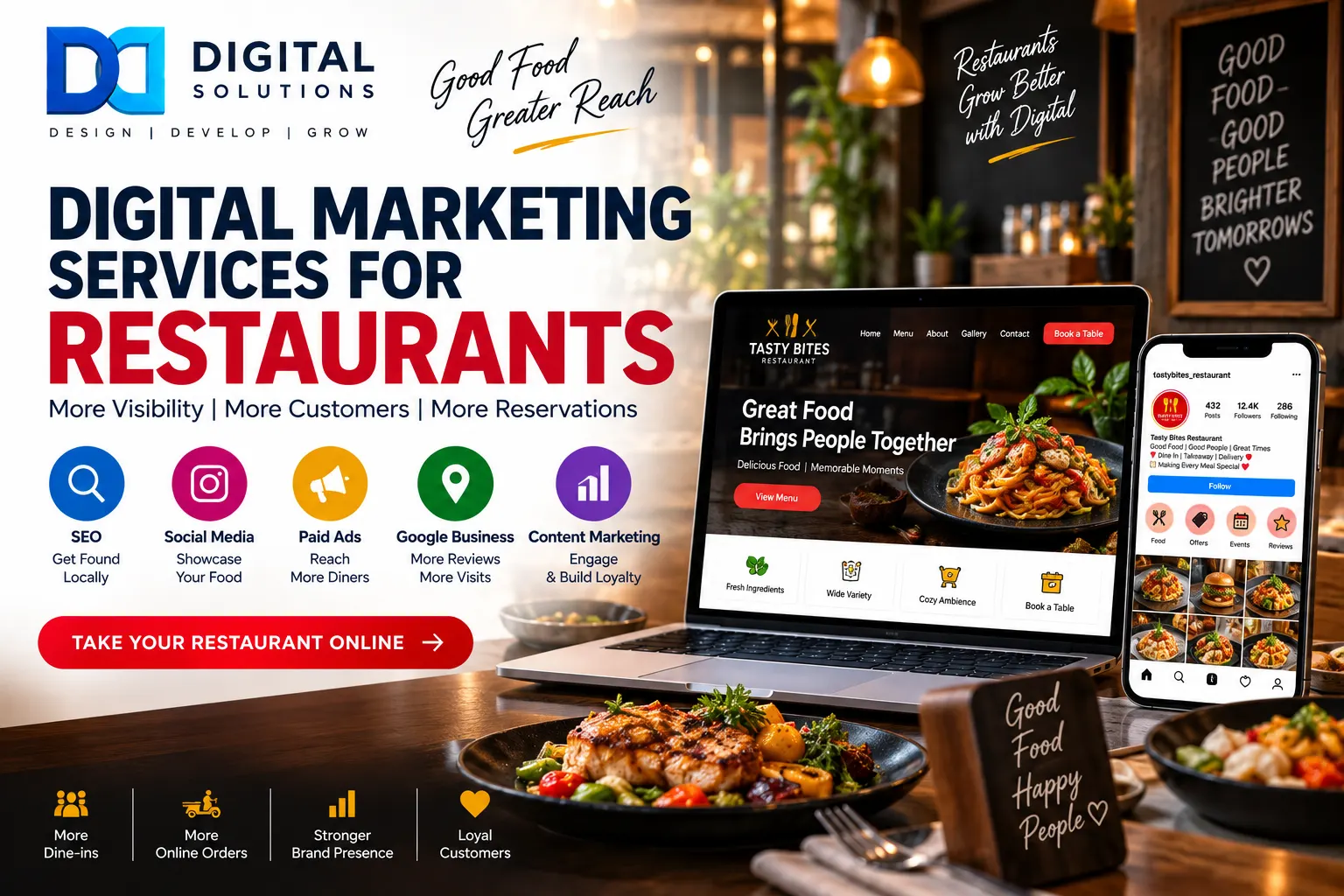

The restaurant industry is highly competitive, and having great food alone is no longer enough to attract a steady stream of customers. People now search online for restaurants, read reviews, compare menus, check photographs, explore social media, and look for offers before deciding where to dine. Digital Marketing Services for Restaurants help restaurants build a strong online presence, reach local customers, increase brand awareness, and generate more reservations, calls, orders, and visits.
A well-planned digital marketing strategy can connect a restaurant with customers at every stage of their decision-making journey. Search engine optimization can improve organic visibility, social media can showcase food and ambience, paid advertising can reach nearby customers, and content marketing can keep the brand active online. When these strategies work together, a restaurant can create a consistent digital presence that supports long-term growth.
Table of Contents
Why Digital Marketing Is Important for Restaurants
Customers frequently use search engines and social media when deciding where to eat. Searches such as “restaurants near me,” “best restaurants in [location],” “family restaurants near me,” and “best biryani restaurant in [location]” can bring highly relevant customers to a restaurant. If a restaurant does not have a strong online presence, potential customers may discover competing restaurants instead.
Digital marketing gives restaurant owners the opportunity to present their food, menu, atmosphere, location, offers, and customer experiences to the right audience. It also provides measurable marketing channels that can be improved over time. Instead of depending only on traditional advertising, restaurants can use SEO, social media, Google Business Profile optimization, online advertising, and content marketing to attract customers throughout the year.
Local SEO for Restaurants to Attract Nearby Customers
Local SEO is one of the most important strategies for restaurants because customers usually prefer dining options that are convenient to reach. A properly optimized online presence can help restaurants become more visible for searches related to their location, cuisine, restaurant type, and dining experience. Location-specific searches often indicate strong customer intent because users are actively looking for a place to eat.
Restaurant SEO should include relevant service and location pages, optimized page titles, descriptions, headings, internal links, image optimization, mobile-friendly design, and useful content. Each page should have a specific purpose and primary keyword rather than targeting the same phrase repeatedly. This approach can help prevent keyword cannibalization while giving search engines a clearer understanding of the restaurant’s website.
Google Business Profile Marketing for Restaurants
A restaurant’s Google Business Profile can play an important role in local customer discovery. Potential diners can find important information such as the restaurant’s address, opening hours, photographs, reviews, menu information, contact details, and other available features. This information can influence a customer’s decision before they even visit the restaurant website.
Restaurant owners should keep their business information accurate and regularly update photographs and other relevant details. Genuine customer reviews can also contribute to a stronger online reputation. Responding professionally to reviews shows customers that the restaurant values their feedback. Maintaining an active and accurate local profile can help improve the restaurant’s visibility among people searching for dining options in the area.
Social Media Marketing for Restaurants
Restaurants are naturally suited to social media because food is highly visual. High-quality photographs and videos of dishes, beverages, interiors, chefs, preparation processes, and customer experiences can create strong engagement. Platforms such as Instagram, Facebook, and YouTube provide restaurants with opportunities to showcase their personality and encourage people to visit or order.
A successful restaurant social media strategy should include more than promotional posts. Restaurants can share chef specials, food preparation videos, customer experiences, behind-the-scenes content, seasonal dishes, dining tips, and special events. Consistent branding and regular content can help customers recognize the restaurant and remain connected with the business between visits.
Restaurant Website Design and Online Visibility
A professional restaurant website provides a central online destination where customers can find complete information about the business. The website should make important details such as the menu, location, opening hours, contact information, reservation options, food photographs, and services easy to find. A clear and attractive website can also strengthen the restaurant’s credibility.
The website should be designed for mobile users because many customers search for restaurants while they are travelling or looking for a place to eat nearby. Fast loading pages, simple navigation, readable content, optimized images, and clear calls to action can improve the customer experience. Buttons such as “View Menu,” “Book a Table,” “Order Now,” or “Contact Us” should be easy to find.
Content Marketing Ideas for Restaurants
Content marketing can help restaurants attract customers by providing useful and interesting information beyond their regular menu. Blog topics can include local food guides, information about different cuisines, special ingredients, healthy dining choices, food preparation methods, seasonal dishes, and restaurant event announcements. Such content can also create additional opportunities to appear in relevant search results.
Visual content can make restaurant marketing even more effective. Short videos can show how popular dishes are prepared, introduce chefs, highlight the restaurant environment, or showcase new menu items. Seasonal content around festivals, celebrations, holidays, and special occasions can also encourage customers to consider the restaurant for their next dining experience.
Social Media Advertising for Restaurants
Organic social media can build a restaurant’s audience, but paid social advertising can help reach a larger and more targeted group of potential customers. Restaurants can promote new menu launches, special offers, events, weekend promotions, festive menus, or specific dining experiences to audiences within selected locations.
Successful advertising requires more than attractive food photographs. The campaign should have a clear objective, relevant audience, compelling message, strong creative, and an appropriate landing page or contact option. Restaurants should also track meaningful actions such as website visits, calls, enquiries, reservations, and orders. This makes it easier to understand which campaigns are actually contributing to business growth.
Google Ads for Restaurant Marketing
Google Ads can help restaurants appear when customers are actively searching for relevant dining options. Someone searching for a specific cuisine or restaurant category may already have strong intent to visit or order. Paid search advertising can therefore complement organic SEO and help restaurants gain additional visibility for valuable searches.
Campaigns can be structured around different services, locations, cuisines, or customer requirements. For example, separate campaigns could promote dine-in services, takeaway, delivery, private dining, or special events. Sending users to relevant pages instead of a generic homepage can improve the customer experience and make it easier for visitors to take the desired action.
Online Reviews and Restaurant Reputation Management
Online reviews have a significant influence on restaurant decisions. Customers often check ratings and read recent reviews before choosing where to eat. Positive reviews can create trust and encourage new customers to try the restaurant, while unanswered complaints may create uncertainty for potential diners.
Restaurants should focus on providing excellent food and service and encourage genuine customers to share honest experiences. Reviews should never be artificially created or manipulated. Responding professionally to both positive and negative feedback can demonstrate that the restaurant takes customer satisfaction seriously. A consistent reputation management strategy can strengthen the restaurant’s online image over time.
Instagram Marketing Strategies for Restaurants
Instagram provides restaurants with an excellent opportunity to turn food into visual storytelling. Professional photographs, Reels, Stories, and short videos can highlight signature dishes, chef creations, restaurant interiors, customer experiences, and special events. Well-produced content can make potential customers curious about the restaurant and encourage them to explore the menu.
Restaurants can also use Stories to promote daily specials, limited-time dishes, table availability, events, and behind-the-scenes moments. Reels can focus on food preparation, plating, transformations, trending formats, or customer reactions. Using relevant captions, location information, hashtags, and clear calls to action can further support restaurant discovery and engagement.
WhatsApp Marketing for Restaurants
WhatsApp can provide restaurants with a convenient way to communicate with customers. Depending on the business model, it can be used for reservation enquiries, order-related communication, event enquiries, customer support, updates, and selected promotional messages. Customers often appreciate quick communication when they want information about menus, availability, or special services.
Restaurants should use messaging responsibly and avoid sending excessive promotional content. Communication should be relevant and appropriate for customers who have opted in or otherwise expect messages from the restaurant. Useful updates, reservation confirmations, special event announcements, and occasional relevant offers can create a better customer experience than frequent generic promotions.
Digital Marketing for Restaurant Offers and Events
Special offers and events can create excellent opportunities for digital marketing campaigns. Restaurants can promote festive menus, weekend specials, live music nights, birthday packages, family dining offers, corporate events, private parties, and seasonal experiences. Creating dedicated campaigns for these occasions can help restaurants attract customers with specific needs.
Promotions should clearly explain what is being offered, who it is intended for, when it is available, and how customers can book or enquire. Social media posts, Google advertising, website banners, email communication, and WhatsApp updates can work together to promote the campaign. Tracking reservations and enquiries from each campaign can help determine which promotions deliver the best results.
Mobile-Friendly Marketing for Restaurants
Mobile optimization is essential because customers frequently search for restaurants while they are away from home. A potential diner may use a smartphone to find a nearby restaurant, check its menu, read reviews, call the business, or get directions. If the website is slow or difficult to use on mobile devices, the customer may quickly move to another restaurant.
A mobile-friendly website should make essential information accessible with minimal effort. Menus should be easy to read, contact buttons should be visible, maps should work properly, and booking or enquiry processes should be simple. Optimizing images and reducing unnecessary website elements can also improve loading speed and create a smoother experience for mobile visitors.
Measuring Digital Marketing Results for Restaurants
Measuring marketing performance helps restaurant owners understand which strategies are contributing to real business outcomes. Important metrics can include website traffic, search visibility, phone calls, reservation enquiries, online orders, social media engagement, advertising conversions, and customer acquisition costs. Focusing only on likes and followers may not provide an accurate picture of marketing success.
Analytics can show which pages and campaigns attract valuable visitors and which channels generate the most enquiries or bookings. One social media post might receive fewer views but generate more reservations than a post with much higher engagement. Reviewing performance regularly allows restaurant owners to improve their marketing budget and concentrate on channels that deliver meaningful results.
Choosing the Right Digital Marketing Services for Restaurants
Every restaurant has different marketing requirements based on its cuisine, location, target customers, price range, services, and business goals. A new restaurant may need strong local SEO, social media awareness, website development, and launch advertising. An established restaurant may require ongoing SEO, paid campaigns, content marketing, reputation management, and customer retention strategies.
When choosing Digital Marketing Services for Restaurants, businesses should look for a complete strategy rather than isolated services. SEO can attract organic visitors, social media can showcase the food, paid advertising can generate targeted traffic, and the website can convert visitors into reservations or orders. Connecting these channels creates a more effective customer journey from online discovery to restaurant visit.
Benefits of Professional Digital Marketing for Restaurants
Professional digital marketing can help restaurants increase online visibility, reach local customers, build brand awareness, strengthen their reputation, and generate more opportunities for reservations and orders. It also allows restaurants to promote specific services and offers to audiences who are more likely to be interested in them.
Another major benefit is the ability to build long-term digital assets. A properly optimized website, strong local presence, useful content, active social media profiles, and genuine customer reviews can continue supporting the restaurant after individual advertising campaigns have ended. With consistent optimization and measurement, digital marketing can become an important part of a restaurant’s long-term growth strategy.
Conclusion
Digital Marketing Services for Restaurants can help restaurants compete effectively in an increasingly digital dining market. Customers are using search engines, Google Business Profile listings, social media, restaurant websites, and online reviews to decide where to eat, making online visibility an essential part of restaurant marketing.
A strong strategy should combine local SEO, Google Business Profile optimization, social media marketing, content creation, paid advertising, reputation management, website optimization, and customer communication. By creating useful content, showcasing food visually, maintaining a strong local presence, and making reservations or enquiries easy, restaurants can attract more potential customers and build lasting relationships. Consistent digital marketing can help turn online searches and social interactions into real restaurant visits, reservations, orders, and business growth.
